
Achilles Tendinitis Treatment Overview
Achilles tendinitis is a frequent source of Achilles tendon pain and is commonly associated with overuse, repetitive strain, or inflammation affecting the tendon near the heel, including insertional Achilles tendinitis. Modern Achilles tendonitis treatment is focused on reducing inflammation, restoring tendon strength and function, and improving overall mobility. When conservative therapies do not provide sufficient relief, specialized Achilles tendinitis surgery performed by an experienced Achilles tendon specialist may help patients achieve lasting pain relief and safely return to daily activities and sports.
What is Achilles Tendinitis?
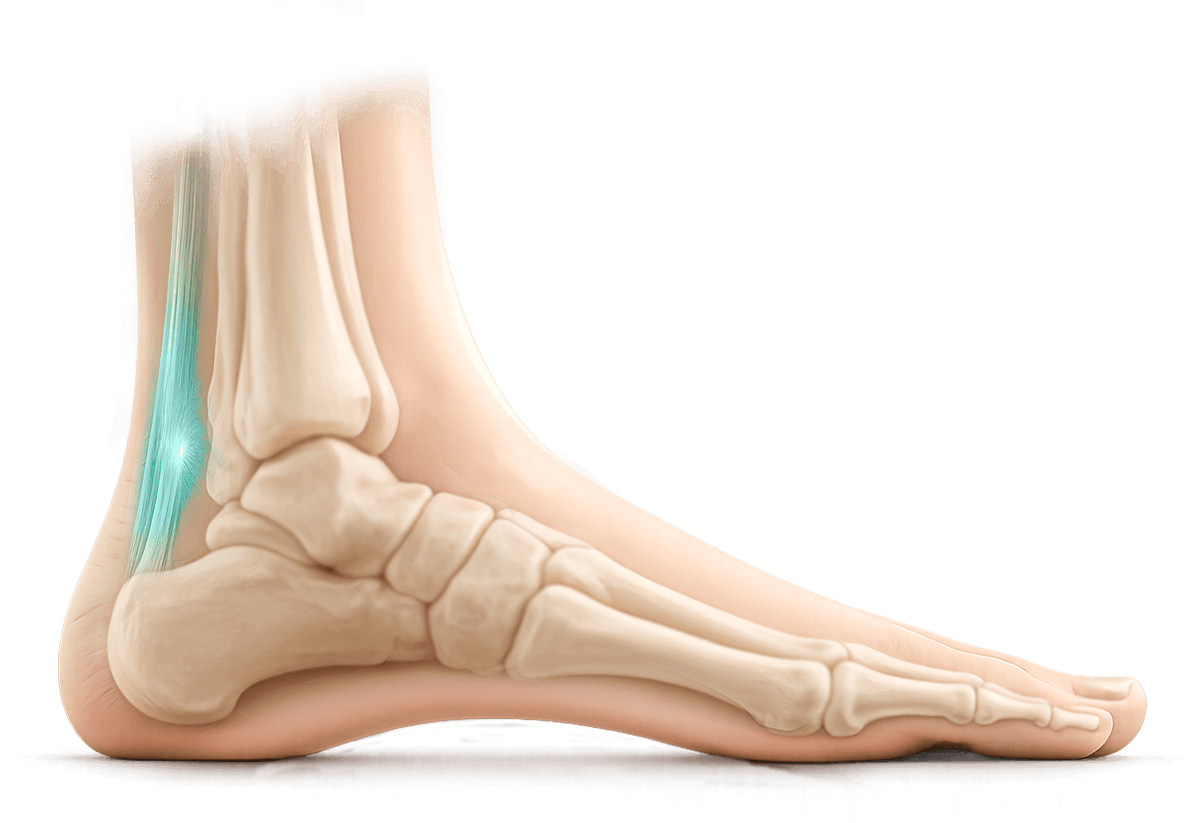
Achilles tendinitis, also known as Achilles tendinopathy, is a condition characterized by pain, swelling, and degeneration of the Achilles tendon, which connects the calf muscles to the heel bone. It affects approximately 6% of the general population and is seen most commonly in active individuals, particularly adults over the age of 45.
Symptoms are typically felt 2 to 6 cm above the point where the tendon inserts into the heel bone. Many patients experience significant discomfort when first walking after periods of rest. The pain may improve with mild activity but often becomes worse during prolonged or high-intensity exercise. The tendon can also become tender, swollen, or visibly thicker compared to the opposite side.
What Causes Achilles Tendinitis?
Achilles tendinitis usually develops as a result of repetitive stress placed on the tendon over time, particularly from activities such as running or jumping. Repeated microscopic injury can lead to an abnormal healing response and structural changes within the tendon tissue. Certain medications, especially fluoroquinolone antibiotics such as ciprofloxacin, have also been associated with an increased risk of Achilles tendon disorders, particularly in older individuals.
Non-Surgical Treatment Options
- Eccentric exercises: Specialized strengthening exercises that have been shown to improve tendon function and reduce pain
- Activity modification: Limiting or adjusting activities that place excessive strain on the tendon
- Physical therapy: Including stretching programs, soft tissue treatment, and tendon mobilization techniques
- Heel lifts or orthotic devices: To decrease stress and tension on the Achilles tendon
- Extracorporeal shock wave therapy (ESWT): A sound wave treatment that may help stimulate healing and decrease pain
- Pain medications: Over-the-counter medications that may provide temporary symptom relief
It is important to understand that corticosteroid injections are generally avoided because they may increase the risk of Achilles tendon rupture.
When Surgery May Be Needed
If symptoms continue despite several months of appropriate non-surgical treatment, surgery may be considered. This is especially common in patients with insertional Achilles tendinopathy, where pain occurs directly at the tendon’s attachment to the heel bone and may be associated with a bony enlargement known as a Haglund deformity.
The Minimally Invasive Zadek Osteotomy
The Zadek osteotomy is an advanced surgical procedure that offers several advantages compared to traditional open surgery for insertional Achilles tendinopathy. The procedure involves creating a precise cut within the heel bone (calcaneus) to remove a small wedge of bone. This changes the position of the heel bone and reduces pressure on the Achilles tendon.
How the Procedure Works
The procedure is performed through small incisions using specialized minimally invasive instruments. A small wedge of bone, usually about 1 cm in size, is removed from the heel bone, and the bone is stabilized with screws. This repositioning moves the bony prominence away from the tendon, helping to decrease irritation and mechanical pressure.
Key Advantages of Minimally Invasive Zadek Osteotomy
Reduced Postoperative Pain
Clinical studies have demonstrated substantial pain improvement following the procedure. In one study involving 108 patients, pain scores improved from an average of 7.7 out of 10 before surgery to 0.4 out of 10 after surgery. Because the minimally invasive approach causes less disruption to surrounding tissues, patients generally experience less postoperative discomfort.
Lower Risk of Infection and Wound Complications
The minimally invasive technique has been associated with a very low complication rate. Research demonstrates an overall complication rate of approximately 3.8%, which is significantly lower than rates reported with traditional open procedures. In direct comparisons, wound complications occurred in only 2.9% of patients treated with percutaneous Zadek osteotomy, compared to 25.6% of patients treated with open surgery.
Earlier Weight Bearing
An important advantage of this procedure is the ability for patients to begin weight bearing relatively early after surgery. Although recovery protocols vary depending on the individual patient, the stable fixation provided by the screws allows earlier mobilization compared with surgeries that require complete tendon detachment and reattachment.
What to Expect: Recovery and Outcomes
Short-Term Recovery
Your surgeon will provide individualized postoperative instructions, which may include wearing a protective walking boot and gradually returning to activity. Most patients notice progressive improvement in pain and function during the first few months after surgery.
Long-Term Results
- Significant improvement in foot and ankle function
- Substantial reduction in pain
- 98% patient satisfaction rate
- Return to normal daily activities and sports participation
How the Procedure Helps
- Reducing pressure between the heel bone and Achilles tendon
- Repositioning the bony prominence away from the tendon
- Improving the biomechanics of the heel and Achilles tendon complex
Is This Procedure Right for You?
- Insertional Achilles tendinopathy that has not responded to non-surgical treatment
- Pain at the back of the heel where the Achilles tendon attaches
- A bony prominence (Haglund deformity) contributing to tendon irritation
- Difficulty participating in daily activities or sports because of persistent heel pain
Achilles Tendonitis Surgery – Specific Post-Operative Course
Week 0–2
- Allowed to walk on the surgical extremity using the surgical boot
- Foot wrapped in bandages
- Elevate the foot as needed to reduce postoperative swelling and discomfort
- Take pain medication as needed
- Mild bloody drainage through the bandage may occur
- Do not change the bandage unless specifically instructed by your doctor
- Remove the boot several times daily to gently move the ankle
- No need to sleep in the boot
Week 2–6
- First postoperative follow-up appointment
- X-rays performed
- Dressing changed
- Continue using the boot while walking
- Begin physical therapy
Week 6
- The boot is discontinued
- Continue physical therapy
- Perform home exercises at least twice daily as directed by the physical therapist
- May resume low-impact sports activities
Week 12+
- Most patients are cleared to return to running and higher-impact activities
- Heel pain is typically expected to resolve approximately 4 months after surgery
Your Surgeon for Achilles Tendinitis Treatment on Long Island
Kristian Efremov, MD, PhD, is a fellowship-trained orthopedic foot and ankle surgeon. He evaluates and treats Achilles tendinitis for patients across Nassau and Suffolk County at NYU Langone Ambulatory Care East Meadow, 1530 Front Street, Suite 200, East Meadow, NY 11554.
Options covered on this page range from eccentric exercises, physical therapy and shock wave therapy to the minimally invasive Zadek osteotomy. The right option depends on your exam, imaging and goals.
Dr. Efremov completed his foot and ankle surgery fellowship at New England Baptist Hospital and is a Clinical Assistant Professor in the Department of Orthopedic Surgery at NYU Grossman Long Island School of Medicine.
To request an appointment, call (516) 324-7500 or read more about Dr. Efremov.
Medical Disclaimer. The information provided on this website is intended for general educational and informational purposes only and is not a substitute for professional medical advice, diagnosis, or treatment. Always seek the advice of a qualified healthcare professional regarding any medical condition, symptoms, or treatment options.